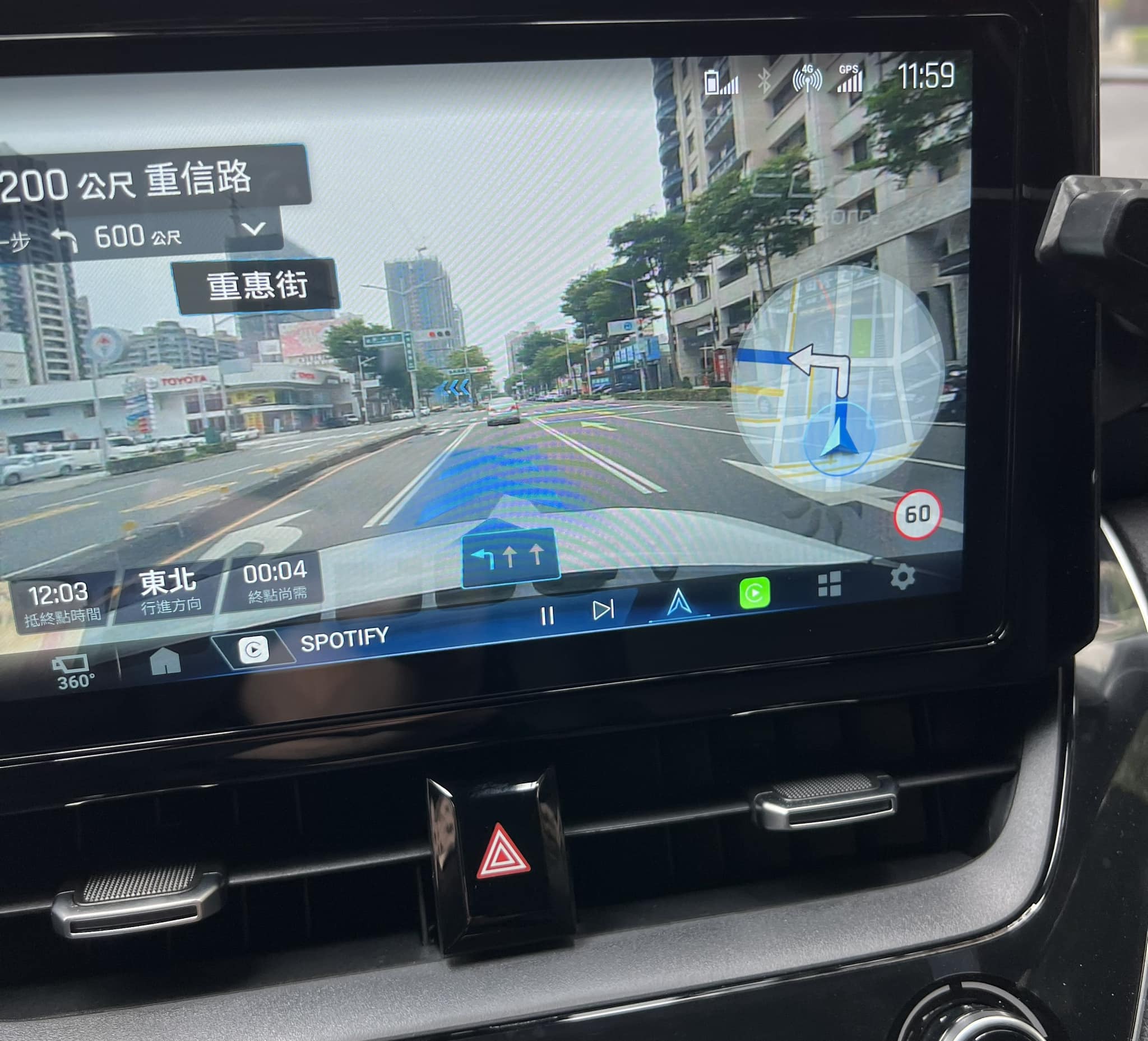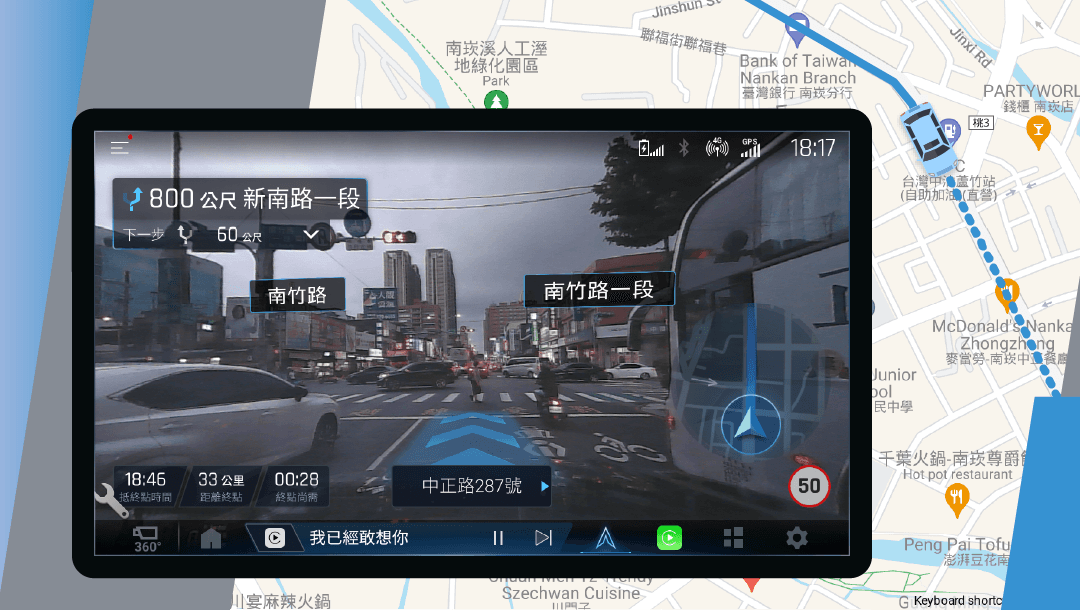
Why AR navigation?
Traditional turn-by-turn navigation asks drivers to translate a map into the real world in their heads — a mental step taken at the worst possible moment, eyes split between screen and road.
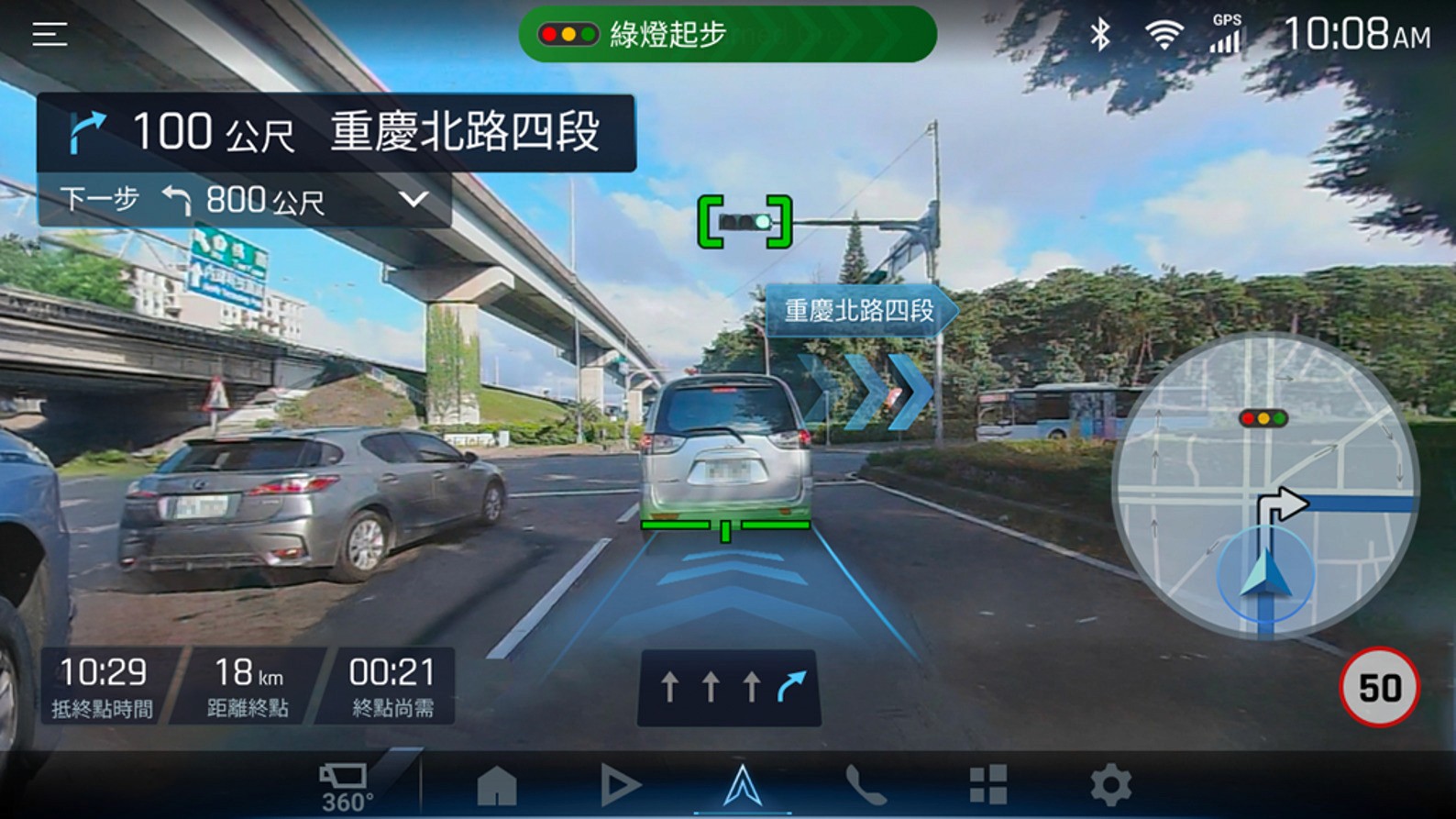
The goal: an intuitive navigation that shows guidance straight over the reality around the driver, so the road and the directions become one view.
Designing for perception, not just display
With a background in perceptual and cognitive psychology — and prior research on driver hazard perception and attention — I treated this as a perception problem first, interface problem second. Every element had to reduce mental workload, not add to it, in a context where a moment's confusion has real consequences.
A sense of control and an element of predictability are what make drivers feel at ease.
Four elements, each with a psychological rationale
The AR experience came together as four coordinated elements, each answered a specific question about how drivers perceive, anticipate, and stay calm.
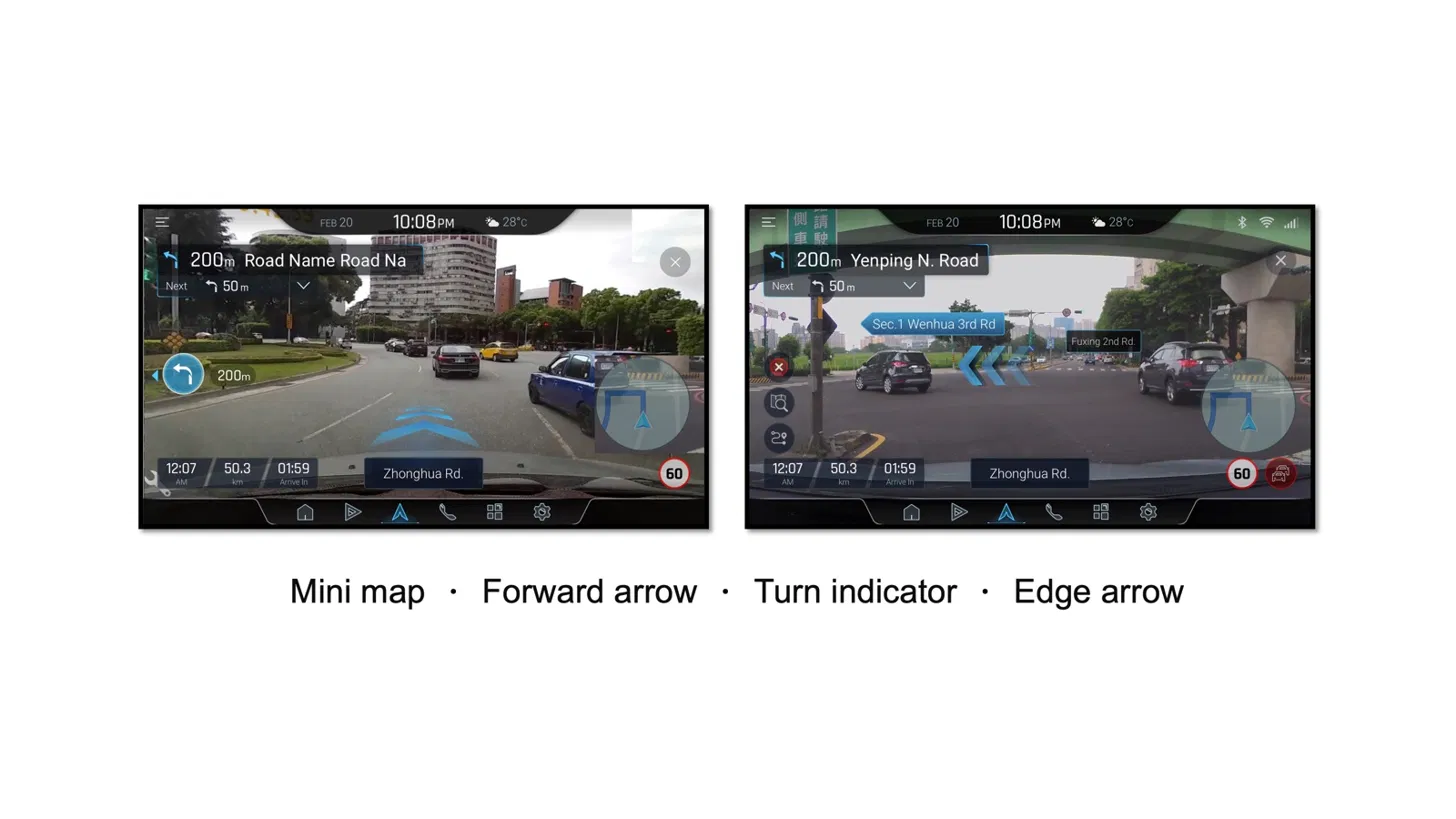
Mini map — Control through preview
Lets drivers preview the upcoming route at a higher map scale, with POIs removed — prioritizing a sense of control and predictability over clutter.
Forward arrow — Turning a constraint into a signature cue
The system had no lane recognition, yet the stakeholders wanted a fancy, high-tech guidance cue ahead of the car. My answer: a forward arrow whose animation responds to the driver's speed, creating a tangible link between the real world and the screen, without needing lane-level data.
Turn indicator — A fishbone that buys reaction time
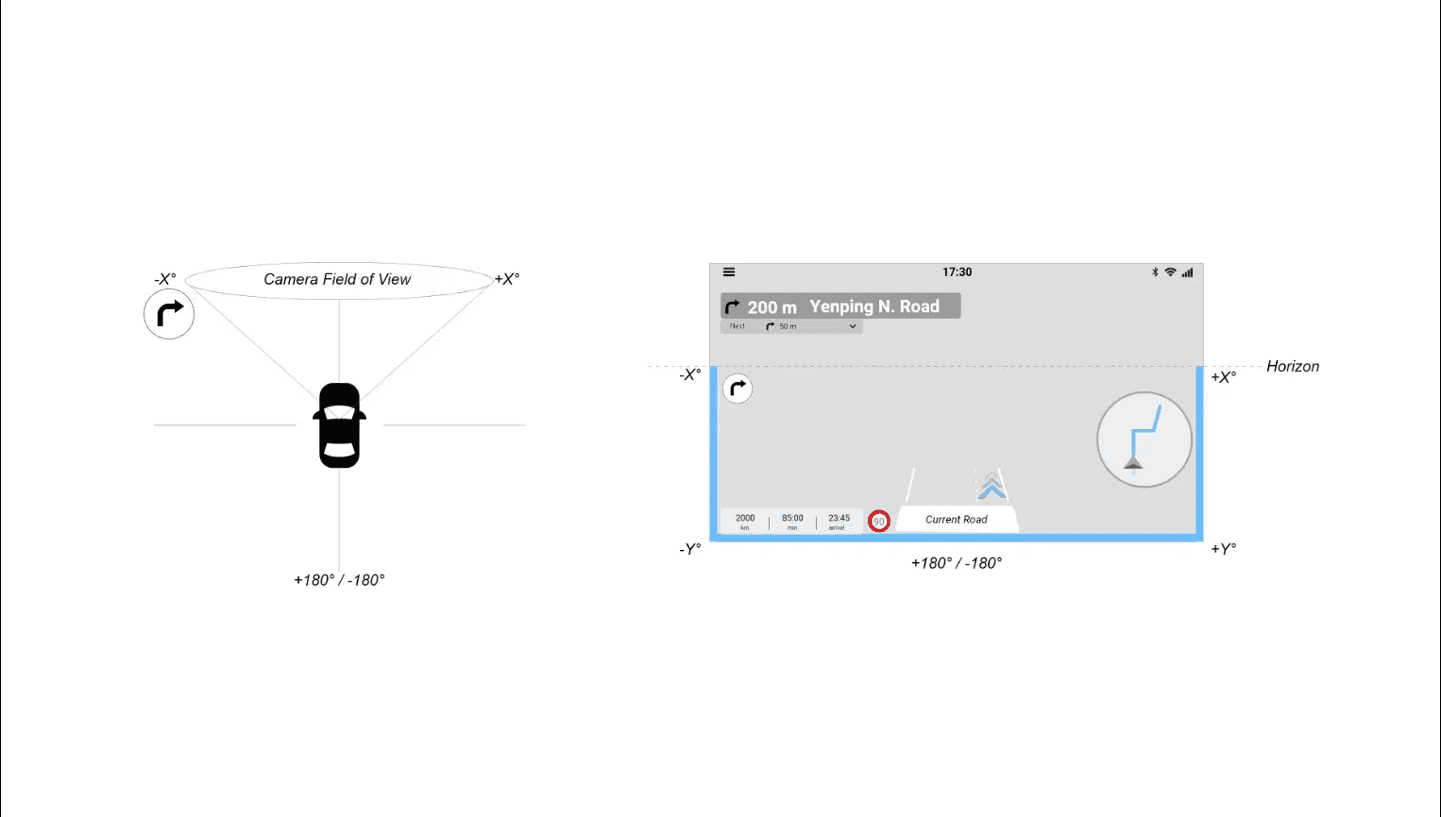
A fishbone-style indicator that gives drivers enough response time and reassures them, at the moment of the maneuver, that it's "go-time".
Edge arrow — Easing the mind ahead of the turn
Provides a vague direction of the next maneuver before it arrives — putting the driver's mind at ease without demanding precise attention too early.
Designing AR with almost no map to follow
The project meant working within real technical limits, bridging the gap between what the carmaker expected of "AR" and what drivers actually understood it to be — with very few existing references to draw from. I defined the interaction details and worked closely with software teams to bring them to life.
Recognized for the experience
The seamless indoor-to-outdoor AR navigation experience was honored with an iF Design Award 2024 for User Experience — validating an approach that put the driver's perception at the center of the design.